WirelessInfo.com, a new web site covering the ever-changing wireless industry, launches today. I'll be one of the bloggers there bringing you the latest news on new cell phones and accessories, new mobile technologies and other useful information.
No, The Paper PC isn't going anywhere. I'll continue to bring the latest in consumer electronics and personal computing to this blog. I'll just be spreading myself a little thinner.
See you there...and here!
Saturday, March 17, 2007
Wednesday, March 14, 2007
AAA TripTik: One for the Road
 When you think of the American Automobile Association, you might think of senior citizens, big recreational vehicles, road service and old-style printed maps. Starting now, the AAA want you to think of it as a prime travel destination on the Web.
At a recent press event at New York's Columbus Circle, the AAA announced the relaunching of its AAA.com Web site featuring its TripTik automobile trip-planning service. What's new is the new open-door policy for TripTik. Instead of being a members-only service, all Web surfers can now access the service and use AAA's exclusive data such as its hotel- and restaurant-rating services.
Billed as the first online travel agency exclusively designed for motorists, TripTik's maps offer data not available elsewhere, such as the AAA's diamond rating system for hotels and access to its database of AAA member discounts. For example, if you mapped the immediate area around New York's Yankee Stadium, you'd find the closest AAA-rated hotel is the Howard Johnson's on Sedgwick Ave. in The Bronx while the closest AAA-rated restaurant is Londels on Frederick Douglass Blvd. in Manhattan.
By opening up the TripTik service to all Web surfers, AAA hopes to attract new members by showcasing the discounts that are only available to members, said AAA CEO Robert L. Darbelnet. "We decided to remove the barrier," he said.
The site offers a fuel cost calculator that can generate a figure based on the route and the make and model of the automobile used, said Darblenet, who noted that the Web site, "leverages over 100 years in AAA experience."
Many of the hotels listed on the online map have a direct Web link for reservations. Travelers can then compare the best generally available rates to what they could get if they were AAA members.
For more information, see the AAA Web site, insert your ZIP code and look for the TripTiks link on the left side of the screen.


Monday, January 15, 2007
CES 2007: Simple Pleasures

The Consumer Electronics Show is over for 2007 but the buzz--and the jet lag for many of the 140,000 who attended--continues.
While there were more sophisticated high-tech gizmos than you could shake a stick at in Las Vegas last week, there were many interesting low-tech products that promised to make life simpler without emptying your pockets. For example:
The Power Docking Station from Digital Innovations LLC is simply a nice-looking stand for holding handheld devices like cell phones and MP3 players while they're charging. Rather than have a spaghetti tangle of AC adapters and wires under your desk, you can hide up to four AC adapters within the docking station, which has an internal power strip. The metal holders adjust to the width of the devices. For $29.99 the Power Docking Station helps you project the image that you're organized and know what you're doing--which isn't a bad thing.
 MusicMarker is another handy low-tech gadget that fills a niche. The scenario is simple: You hear a song but you just can't think of the title or the artist. Click the button on the tiny MusicMarker key fob and its built-in microphone records a few seconds of whatever you're listening to. The next time you get to a PC with Internet access, you can upload the sound clip to the MusicMarker music-recognition service, which searches its database and reports back with the name of the song and the artist as well as information on where you can go to purchase the song or the album it came from.
The $14.90 unit from MusicMarker Ltd. of Oxford, England, was a CES Innovations Design and Engineering Awards honoree, a nice kudo for such a simple device and for a company that wasn't even exhibiting at CES.
Watch this space for more Simple Pleasures selections from CES.
Photos courtesy of Digital Innovations LLC and MusicMarker Ltd.
Tuesday, January 09, 2007
Fuji, Universal Remote Control hope to boost sales through electronics show
See my article from the 2007 International Consumer Electronics Show in the Jan. 9 edition of The Journal News.
http://nyjournalnews.com/apps/pbcs.dll/article?AID=/20070109/BUSINESS01/701090318/1066
http://nyjournalnews.com/apps/pbcs.dll/article?AID=/20070109/BUSINESS01/701090318/1066
Friday, December 29, 2006
Whoosh, There It Is! Philips Rolls Out amBX Fans, Speakers, Lights
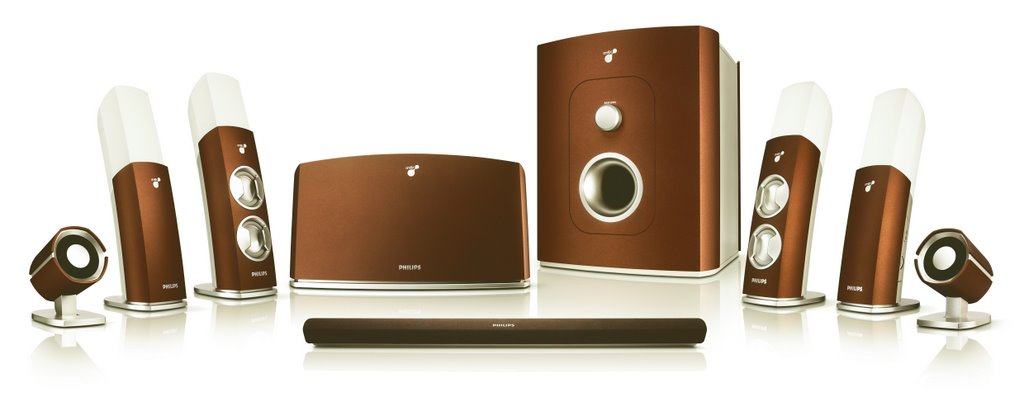 Whoosh! What was that? Never mind: It's just your PC blowing in your face. Huh?
Just when you thought game hardware makers were getting close to the ultimate immersive experience with seat shakers and ultra-high-resolution graphics, Royal Philips Electronics adds another element to the sensory overload: Wind.
The new amBX peripherals from Philips includes a wrist rest that rumbles, speakers with lights that change in response to colors on your monitor and a set of small, variable-speed fans (below) that attempt to duplicate the weather conditions in the game you're playing.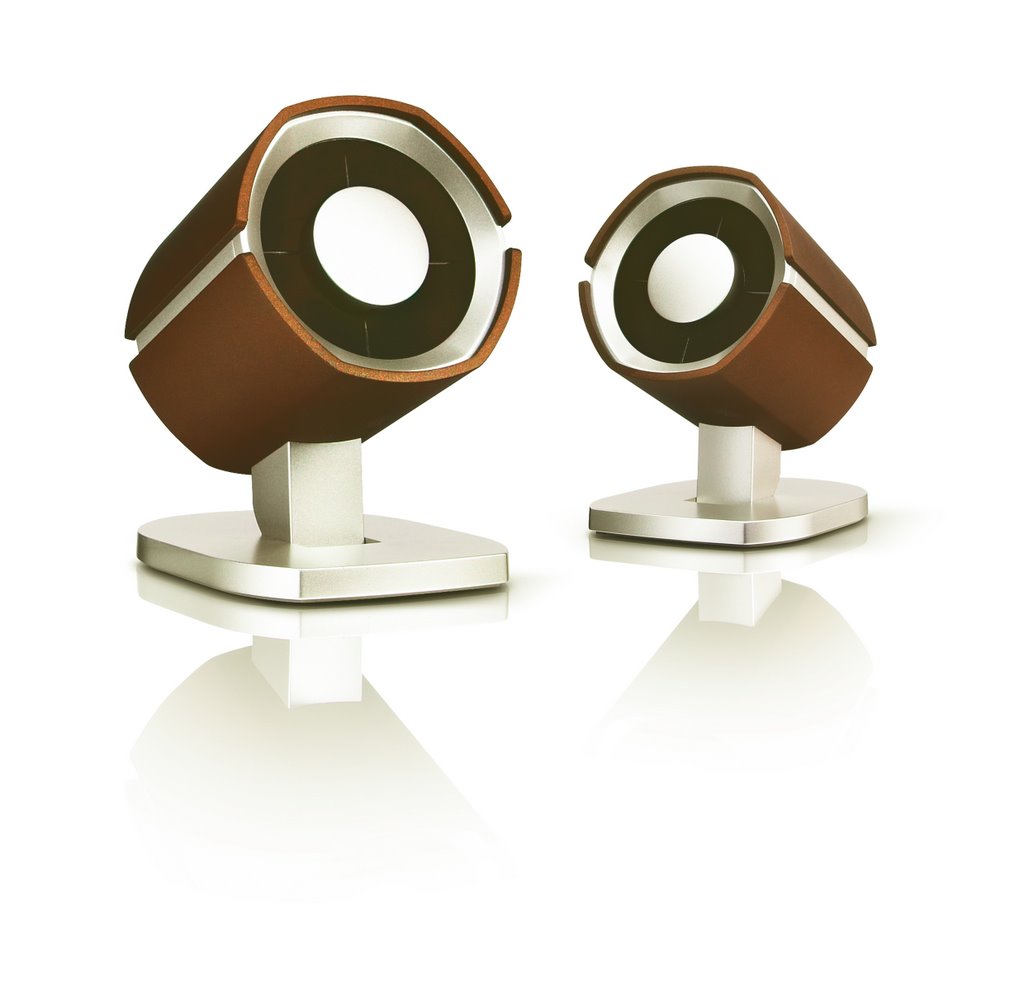
A complete amBX kit includes two satellite lights, two speakers with lights, a subwoofer, two fans, a wrist rumbler and a control unit. The control unit also comes with "wall washer" lights.
 more titles will be announced soon, according to Philips.
What's next? Water pistols? Don't laugh. While Philips representatives said that amBX could support unique peripherals like water sprayers and smell generators, no such accessories are currently on the drawing board.
Monday, November 27, 2006
Gerald M. Boyd: Thanks

Gerald M. Boyd (center) with former NYABJ President Errol Cockfield (left) and New York City Mayor Michael R. Bloomberg at the 2002 NYABJ Awards Dinner at Columbia University.
Photo Copyright 2006, Robert S. Anthony, Stadium Circle Features
Thanks Gerald. I think that's the best thing I can say to someone who worked so selflessly to help others. The passing of former New York Times Managing Editor Gerald M. Boyd on Thanksgiving Day leaves a major void in newspaper journalism.
Gerald is on my personal "Never Thought I'd See The Day" list. Just as I never thought I'd see the day when a black person would serve as mayor of New York City, lead a National Football League team to the Super Bowl or serve as a NASA astronaut, I never thought I'd see the day when a black man would help lead one of New York City's major dailies. Thanks for scratching a line off my list Gerald.
I serve as parliamentarian--the keeper of the bylaws--for the New York Association of Black Journalists (NYABJ). One bylaw states that the NYABJ shall "Work to expand opportunities for black journalists in managerial and supervisory positions." Few people worked to this end with more dedication and fervor than Gerald.
Then again, if you needed someone to "hook you up" with a good job at the Times, Gerald was not the person to see. He had no time for those bereft of talent or devoid of dedication. If you came to him with a proven track record and the desire to put in a 110 per cent effort to be accurate and fair with your work, he'd lend an ear and offer some honest advice.
I'll let others who knew him better write the longer accolades. For now, I'll just say thanks. But Gerald, if you find yourself in a position to edit St. Peter's master list...
Friday, October 27, 2006
The Silex S2: The "Perfect" Fingerprint Reader?
[1].JPG_10272006.jpg) Nobody's perfect and nothing works 100 per cent of the time, right? Tell that to Silex Technology America Inc. because the Salt Lake City-based company believes it has a biometric technology that comes pretty darn close.
Nobody's perfect and nothing works 100 per cent of the time, right? Tell that to Silex Technology America Inc. because the Salt Lake City-based company believes it has a biometric technology that comes pretty darn close.Walk into a computer store and you'll find add-on fingerprint readers as well as notebook computers and desktop PC keyboards with tiny fingerprint readers built in. Configure the reader to recognize your fingerprint and no one but you will be able to access your sensitive data, right? Unfortunately, the fingerprint reader that works perfectly in the store might not be so cooperative in bad weather, if it gets smudged or if your fingers are wet, dirty or extra dry, said Gary Bradt, vice president of Silex's biometric division. Imagine that: Data kept so securely that not even you can get at your own data.
Enter the Silex S2, a portable USB fingerprint reader which doesn't rely on actual finger contact but uses a proprietary radio frequency technology to read your fingerprint one skin layer deep. Since the sensing electronics don't need to touch your finger, the weather and your digit-cleansing habits won't affect the S2's ability to recognize your fingerprint and unlock your data, said Bradt. The result is near-perfect reading accuracy, he said.
The S2, which comes in a sealed white plastic housing, is slightly smaller but significantly lighter than the current Silex S1, which uses the same RF technology. The S2 is light enough to be worn on a cord around the neck and can be used with a user identity module (UID), a small electronic card similar to the SIM cards used in GSM cell phones to identify user accounts.
The goal, said Bradt is the license the RF fingerprint reading technology to other hardware manufacturers. Will the technology take off? Only time will tell. The S2 will be officially announced Oct. 30.
Photo courtesy of Silex Technology America Inc.
© Copyright 2006 Stadium Circle Features
Monday, October 09, 2006
Messaging Security 2006: Vishing: The Next Big Cyber Headache?
 Halloween is almost here, but you may not have to wait until the end of the month to get a good fright from the latest cybersecurity headache: Vishing.
What's that I hear? Your phone's ringing? According to the Caller ID readout it looks like your bank is calling. Better put this blog aside and take the take that call. But don't leave any personal data behind--it could be a case of vishing.
Such was one of the dire warnings from the security experts at last week's Messaging Security 2006 conference at the Mandalay Bay Resort & Casino in Las Vegas.
Like "phishing"--fraudulent e-mail that has the look and feel of legitimate e-mail from banks, etc.--those who practice vishing use broadband phone systems to pry personal information from their victims via fake voice mail, computer-generated phone calls or by other means.
"We're seeing the first examples of it," said Dr. Paul Judge (left), chief technology officer for Secure Computing Corp., sponsor of the conference. " These are the warning shots."
For example, you could get an automated called from your credit card company alerting you that you are over your credit limit. The call might ask you to log in the phone system with your credit card number and the card's expiration date. The Caller ID you see on your phone might be accurate for your bank but the call could actually be coming in from overseas.
The potential problems from vishing include eavesdropping, Caller ID spoofing, unauthorized access to your personal voice mail, intentional overloading of your voice mailbox, the harvesting of phone numbers from your broadband phone provider, access to billing information and other maladies, said Judge.
Broadband phone services like Vonage, SunRocket and Skype send phone calls over the Internet or via private digital networks instead of the traditional phone network. Since they often have to link to old phone networks, the connection points required to properly hand off the calls have opened new doors for hackers, said Judge.
"You're bringing together many systems that didn't talk or didn't like to talk to each other over the years," said Judge during an Oct. 6 presentation.
Broadband phone services allow users to acquire phone numbers with area codes from other cities, thus making it easy for a distant hacker to appear like a local business. Many broadband phone services offer members sophisticated voice mail systems which sound very professional. Judge told the audience of network security experts that while they might be wise to many vishing techniques, today's hackers have become "...very ingenious in finding ways around your network defenses."
Judge said that while separating bad phone calls from the good can be done by tracking the source of vishing calls to the computers that spew them out, this can be a difficult task since so many new vishers crop up daily. He noted that while there are many widely used data standards for broadband telephony, some services, like Skype, use proprietary protocols and are thus harder for network security experts to work with to keep vishing calls out of their offices.
Jay Chaudhry, vice chairman and chief strategy officer for Secure Computing, also noted that Caller ID data can be easily faked but also noted that encryption of broadband phone traffic can be done relatively easily, thus offering a layer of protection from eavesdroppers.
One strategy to fight vishing is to develop "reputations" for the Internet protocol (IP) addresses of the computers on the Internet that handle voice traffic, he said.
"An IP address is like a Social Security number," said Chaudhry, founder of CipherTrust Inc., which merged with Secure Computing this past summer. "IP is a little bit more tricky [to deal with] but it can be done."
By pinpointing the physical locations of known safe and bad broadband phone services, he said security experts can create multi-layered software and hardware defenses against vishing.
"You don't depend on one technique," said Chaudhry.
So the next time you grab that phone, don't be so eager to respond to requests for sensitive information. You could end up swimming with the vishes.
(Full disclosure: Secure Computing, the conference sponsor, covered the travel and lodging expenses for myself and other journalists.)
Photo and text © Copyright 2006 Stadium Circle Features
Thursday, September 28, 2006
Power to the Masses: HP Buys Voodoo

Hewlett-Packard announced Wednesday that it had reached an agreement to purchase Voodoo Computers Ltd., a privately held company which unashamedly promotes itself as the manufacturer of "the fastest desktop on Earth."
Voodoo, which specializes in high-powered PCs for serious gamers, was founded in 1991 by Rahul Sood, who co-owns the company with his brother, Ravi Sood. HP will establish a new gaming division and will name Rahul Sood, president and chief technology officer at Voodoo, as CTO of the new unit while Ravi Sood, Voodoo's CEO, will serve as the unit's director of strategy.
HP's announcement came at the end of a midtown Manhattan press event which showcased HP's s new consumer desktop and portable computing products and well as future concepts, including a flexible computer display that could be rolled up.
"HP understands our brand. They understand our strategy," said Rahul Sood to dozens of reporters, analysts and HP customers. "HP knows that we want to innovate out of the box."
He noted in his company's blog that HP had a $3.5 billion research and development budget and said that HP's labs were generating almost a dozen patents a day. During Wednesday's presentation he noted that he had received a good deal of moral support from Mark Cuban, best known as the mercurial billionaire owner of the National Basketball Association's Dallas Mavericks. When asked, Cuban, who was in attendance, said he wasn't an investor in Voodoo, just a close friend of the owners.
"Our vision has always been to redefine the machine," said Ravi Sood. Voodoo Computers is based Calgary, Alberta, Canada.
Rahul Sood's Weblog
© Copyright 2006 Stadium Circle Features
Tuesday, September 19, 2006
Almost Ready or Not: Microsoft Opens Floodgates with Vista, Office, Explorer Betas
If you have a cast-iron stomach and a computer that's even tougher, this indeed is your season. No, no summer or fall, but beta season, courtesy of Microsoft Corp.
If you can't wait to get your hands on the next versions of Microsoft's anchor software products, a trip to Microsoft's Web site may leave you giddy. Right now you can download free or almost-free, almost-finished versions of Windows Vista, the next iteration of Microsoft's Windows operating system software; Internet Explorer, its Web browser and 2007 Microsoft Office, the next generation of its business application suite.
Keep in mind that beta, or so-called "release candidate" software aren't fully baked yet and may still have bugs in them, though hopefully no major ones. Microsoft recommends that you back up all important data and states that beta software is "not appropriate for production use." Microsoft offers no support for beta software.
Nevertheless, if you have the nerves and the stomach, the betas are ready.
Internet Explorer 7
The next version of Internet Explorer will include a number of new features, including tabbed browsing, a feature already familiar to users of other browsers like the Mozilla Foundation's Firefox. The version that's available for download is a "release candidate," which is a half a step beyond a beta version but still not quite done.
The IE7 Release Candidate 1 download is free but will cost you up to 12MB of hard disk space, according to the system requirements posted on the IE7 Web site. Once you install IE7 RC1 you can use an upgrade checklist to make sure the browser works correctly with your favorite Web site.
Windows Vista
Like the real thing, Release Candidate 1 of Windows Vista will demand a lot from your PC, especially from its graphics system. Vista's new Aero interface is only accessible to PCs with enough graphics muscle. Short of that, Vista will run but will dumb itself down to a more Windows XP-type interface. Thus make sure you check out Vista's requirements before you get started.
Before you do anything you can evaluate your PC with the Windows Vista Upgrade Advisor, also available on the Vista Web site. Note that many new PCs with today's Windows XP operating system are being sold as Vista-ready, thus letting you know that the units will be able to handle the upgrade.
Installing a new operating system is serious business. If the installation fails and you don't have backup files or your old operating system installation disks, you could end up in a dark place indeed. You can download the software or order it on a CD and pay shipping charges. The Vista release candidate software will expire on June 1, 2007, at which time you'll need a real version of Vista to keep your PC working.
2007 Microsoft Office
For Beta 2 of 2007 Microsoft Office you have a choice of downloading the beta software or test driving its components online via your Web browser. If you take the test drive, you'll have to have to install the Citrix Browser Plug-in into your browser, but this can be done automatically while you're at the Office test drive Web site. You can try out each of the Office components, including Word 2007 (right) which offers some new blog publishing features.
The beta software download will cost you $1.50 and will be anywhere from 75MB to 1GB in size, depending on your PC's setup. Note that the Beta 2 software will "expire" and shift down to a "limited functionality mode" as of February 1, 2007. At that time many key functions will be disabled. Pricing for 2007 Microsoft Office is posted on Microsoft's Web site.
Zune, Zune, Zune
Not it's not beta software, but also at the almost-ready stage is Zune, Microsoft's challenger to Apple Computer Inc.'s popular iPod digital music player. Microsoft announced on Sept. 14 that the unit, which will come in black, blue and white, will be available by the holiday shopping season.
The Zune, shown at right, will offer 30GB of data storage, which Microsoft says is enough for up to 7,500 songs, 25,000 pictures or up to 100 hours of video. The unit has a three-inch color screen as well as an FM radio tuner. It will offer a wireless feature which will make it possible to share music wirelessly between two Zunes. The recipient of a copy-protected song sent this way will be able to listen to the song up to three times in three days before he has to pay for it in order to keep it. The recipient won't be able to forward a received song, according to Microsoft. The unit will be linked to Microsoft's new Zune Marketplace music service, which will go toe-to-toe with Apple's well-established iTunes Store.
Do you have something to say about Microsoft's many, many betas? Let me know below.
If you can't wait to get your hands on the next versions of Microsoft's anchor software products, a trip to Microsoft's Web site may leave you giddy. Right now you can download free or almost-free, almost-finished versions of Windows Vista, the next iteration of Microsoft's Windows operating system software; Internet Explorer, its Web browser and 2007 Microsoft Office, the next generation of its business application suite.
Keep in mind that beta, or so-called "release candidate" software aren't fully baked yet and may still have bugs in them, though hopefully no major ones. Microsoft recommends that you back up all important data and states that beta software is "not appropriate for production use." Microsoft offers no support for beta software.
Nevertheless, if you have the nerves and the stomach, the betas are ready.
Internet Explorer 7
The next version of Internet Explorer will include a number of new features, including tabbed browsing, a feature already familiar to users of other browsers like the Mozilla Foundation's Firefox. The version that's available for download is a "release candidate," which is a half a step beyond a beta version but still not quite done.
The IE7 Release Candidate 1 download is free but will cost you up to 12MB of hard disk space, according to the system requirements posted on the IE7 Web site. Once you install IE7 RC1 you can use an upgrade checklist to make sure the browser works correctly with your favorite Web site.
Windows Vista
Like the real thing, Release Candidate 1 of Windows Vista will demand a lot from your PC, especially from its graphics system. Vista's new Aero interface is only accessible to PCs with enough graphics muscle.
 Short of that, Vista will run but will dumb itself down to a more Windows XP-type interface. Thus make sure you check out Vista's requirements before you get started.
Before you do anything you can evaluate your PC with the Windows Vista Upgrade Advisor, also available on the Vista Web site. Note that many new PCs with today's Windows XP operating system are being sold as Vista-ready, thus letting you know that the units will be able to handle the upgrade.
Installing a new operating system is serious business. If the installation fails and you don't have backup files or your old operating system installation disks, you could end up in a dark place indeed. You can download the software or order it on a CD and pay shipping charges. The Vista release candidate software will expire on June 1, 2007, at which time you'll need a real version of Vista to keep your PC working.
2007 Microsoft Office

For Beta 2 of 2007 Microsoft Office you have a choice of downloading the beta software or test driving its components online via your Web browser. If you take the test drive, you'll have to have to install the Citrix Browser Plug-in into your browser, but this can be done automatically while you're at the Office test drive Web site. You can try out each of the Office components, including Word 2007 (right) which offers some new blog publishing features.
The beta software download will cost you $1.50 and will be anywhere from 75MB to 1GB in size, depending on your PC's setup. Note that the Beta 2 software will "expire" and shift down to a "limited functionality mode" as of February 1, 2007. At that time many key functions will be disabled. Pricing for 2007 Microsoft Office is posted on Microsoft's Web site.
Zune, Zune, Zune
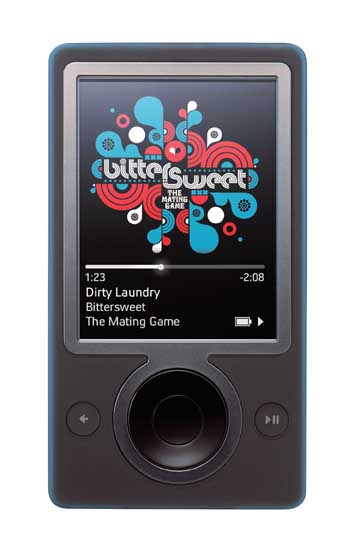
Not it's not beta software, but also at the almost-ready stage is Zune, Microsoft's challenger to Apple Computer Inc.'s popular iPod digital music player. Microsoft announced on Sept. 14 that the unit, which will come in black, blue and white, will be available by the holiday shopping season.
The Zune, shown at right, will offer 30GB of data storage, which Microsoft says is enough for up to 7,500 songs, 25,000 pictures or up to 100 hours of video. The unit has a three-inch color screen as well as an FM radio tuner. It will offer a wireless feature which will make it possible to share music wirelessly between two Zunes. The recipient of a copy-protected song sent this way will be able to listen to the song up to three times in three days before he has to pay for it in order to keep it. The recipient won't be able to forward a received song, according to Microsoft. The unit will be linked to Microsoft's new Zune Marketplace music service, which will go toe-to-toe with Apple's well-established iTunes Store.
Do you have something to say about Microsoft's many, many betas? Let me know below.
Subscribe to:
Posts (Atom)


.JPG)


 Posts
Posts


