Tuesday, July 24, 2007

Panasonic jazzes up Lumix camera line

It isn't often that technology converges with high heels and leotards, but such was the case last week at a New York press conference as Panasonic gave the media an early peek at three new digital cameras that are being announced to the public today.

The new 8.1-megapixel Lumix models include two slim units, the DMC-FX55 (suggested price $349.95) and DMC-FX33 ($299.95, at right); and the larger, prosumer-grade DMC-FZ18 ($399.95, below right).

The key difference between the DMC-FX55 and the DMC-FX33, which share the same external dimensions, is the rear LCD panel. The former comes with a 3-inch LCD while the latter's screen size is 2.5 inches. Both come with a Leica 28mm wide-angle lens with 3.6X optical zoom and both offer 4X digital zoom, 27 megabytes of internal memory and a slot for Secure Digital (SD) or Secure Digital High Capacity (SDHC) removable memory cards. The units are available in a variety of colors.

The SLR-size Lumix DMC-FZ18 comes with an impressive 18X optical zoom, a 28mm wide-angle Leica lens and 4X of digital zoom. An "extra optical zoom" feature extends the zoom to up to 28.7X at the 3-megapixel setting, thus increasing the camera's maximum combined zoom to almost 115X. The unit is available in black (DMC-FZ18K) and silver (DMC-FZ18S). Despite its size, it has relatively little heft at just over three quarters of a pound. It includes a 2.5-inch rear LCD display as well as a 0.44-inch viewfinder display.

All of the new cameras feature face-recognition technology that can pick out as many as 15 faces in a scene. Once identified, the cameras adjust exposure so that the faces aren't washed out or too dark.

Also included in all three is an intelligent scene selection feature which adjusts the camera's mode setting automatically based on what it detects. For example, if a subject is close by, the camera can automatically switch to macro mode.

During the press event, held at Jazz at Lincoln Center in New York's Time Warner building, members of the press were allowed to give the new cameras a spin as a steady stream of jazz performers sang and danced across the large stage.

During my few minutes with a Lumix DMC-FZ18 and a DMC-FX55, the image stabilization circuitry in the cameras seemed to work well. With the DMC-FZ18, I was able to take fairly sharp snaps of the performances, even at maximum optical zoom, from a few levels above the stage (see above). Even from afar, the face-recognition technology was able to select and follow the faces of the performers as they moved.

The LCD display on the diminutive DMC-FX55 was bright and responsive but it was hard to be satisfied with the ample 3.6X optical zoom after playing with the 18X zoom on the DMC-Z18. As with the larger camera, the image-stabilization technology did seem to help keep the long-distance shots sharp (see below).

All of the new Lumix cameras will reach stores in September.

© Text and Photos Copyright 2007 Stadium Circle Features

Tuesday, July 17, 2007

Keeping It Simple: Tivoli Audio's NetWorks Internet Radios

Tom DeVesto clearly enjoys his time at the drawing board. Just look over Tivoli Audio LLC's lineup of table and portable radios and you'll understand just how much the company's founder and CEO enjoys fiddling with the designs of his radios' knobs, cases, dials and displays. When it comes to fashion and technology trends, DeVesto doesn't like to be left behind.

His latest target is Internet radio. Sure, you can listen to an Internet radio station by using your PC and a Web browser, but wouldn't it be nice if you could listen to it by using something that actually looks and works like a radio? That's the impetus behind Tivoli Audio's new NetWorks and NetWorksGo Internet radios, both introduced at a June 22 press event at New York's Helmsley Palace Hotel.

The hard part was making it easy," said DeVesto as he showed off the radios to a crowded press conference. "And I think we've come up with it."

Rather than a computer-like design, the NetWorks radios, available this fall, don't look that much different from Tivoli's existing Model Satellite and SongBook products.

You tune in Internet radio stations by selecting them by call letter or by location from the hundreds of stations preloaded into the radio's memory. The list is updated regularly by Tivoli while you're online. If your favorite station isn't listed, simply write to Tivoli and it will be added, said DeVesto. You can store your favorite stations as presets. During the press conference DeVesto was able to look up and tune in a number of overseas Internet radio stations.

The NetWorks radios can connect to the Web wirelessly via a Wi-Fi connection or you can plug them into to a broadband connection with Ethernet cable. The NetWorksGo portable comes with an AC power adapter or can run on six C-cell batteries. Built in is a battery charger, thus allowing you to recharge nickel hydride (NiMH) and nickel cadmium (NiCad) batteries while the AC adapter is plugged in. The NetWorks table radio will come in a number of finishes.

Both units include conventional FM radio tuners and dual alarm clocks and can also decode MP3, Real Audio and WMA digital music. Lacking, however, is support for HD Radio. Why? DeVesto said that while radio stations benefit greatly from HD Radio technology since it allows them to broadcast more content over the same radio spectrum, the benefits to listeners aren't as clear.

"It's because I still have had a hard time finding what's in it for the customer," said DeVesto.

DeVesto said that pricing on the NetWorks units has not been announced, "...but it's not going to be the cheapest thing on the market."

At a reception before the press conference I asked DeVesto if he enjoyed his role as CEO and chief design tweaker. The answer was a quick "Yes."

"I can do what I want," he said with a wide grin.

Wednesday, May 02, 2007

Gone With the Wind: My $600 Check


"Had my hand on the dollar bill
And the dollar bill blew away"

I Just Want to Celebrate - Rare Earth

The life of a freelance writer is a tough one: You write. You invoice. You wait. But sometimes Nature itself can make things even tougher.

On Monday I received a long-awaited $600 check for a story I completed months ago. Happy at the prospect of being able to pay some bills I decided to drive to my bank--with a scheduled stop to pick up some coffee and a bagel.

As I got out of my car at Fifth Ave. and 4th St. in Brooklyn in front of Junior High School 51, I momentarily placed my mail, including the envelope with the $600 check in it, on the roof. And then it happened...

A sudden gust of wind blew everything off the roof and high up into the air. The mail swirled and danced wildly 20 feet in the air before falling back to earth and jumping up again. I jumped, grabbed, stomped and did whatever else I could do to corral all the envelopes. When all was said and done I had recovered all my mail--except, of course, the envelope with the $600 check in it.

Curses! Son--of--a--bi...!

As I fumed, a passerby who had witnessed the entire comedy walked up with a smile and told me that I wasn't going to believe where the last envelope had landed. And then he pointed. He was right--I didn't believe it.

The envelope was wedged in the frame of a metal window gate on the second floor of the school, far, far out of reach. I took a photo with my cell phone (see above) because I knew no one would believe such a story without some evidence. What are the chances?

However, as bad as my luck was at that moment was as good as it got a few moments later.

I looked to the left and noticed that working outside the school were two maintenance men who just happened to be installing a fire alarm buzzer on the outside of the school--just below the second floor window. And they were using a long ladder! Now what are the chances of that?

After explaining my plight, one of them moved the ladder and retrieved the fugitive envelope. And he wouldn't even let me buy him a cup of coffee for his efforts.

Of course after all of that, I couldn't get the check to the bank fast enough.

So what's the moral of this wind-blown tale? Hang onto your wits and your money. You'll need both to survive as a freelancer.

Copyright 2007 Stadium Circle Features

Thursday, April 26, 2007

Westinghouse HDTVs: Safe at Home

Where is the best place in the home for an LCD HDTV, a digital photo frame or a flat-panel computer monitor?

Anywhere you darn well please, according to the folks at Westinghouse Digital Electronics.

On Wednesday the company invited the media to a large Manhattan loft where it set up HDTVs and other consumer LCD devices in various home settings, including a bedroom, a kitchen and yes, even a bathroom—for those who can’t leave their favorite dramas behind while bathing.

The event was to show how high tech and home life can coexist without getting each other's way, explained Sherry Chapman, Westinghouse Digital Electronics marketing communications manager. She said the products being showcased were meant to be functional and easy to use while blending in with the home environment. Dark and muted colors were evident as opposed to shiny white or bright silvery cases.

For example, the TV set up in the kitchen was a 26-inch Westinghouse SK-26H590D HDTV (see photo), which has a built-in, front-loading DVD player that automatically turns on the TV once a disc is inserted. The idea here is that you don’t want to meddle with the TV too much when you’re cooking, Chapman explained. The $699 unit offers a 1366-by-768 pixel resolution which supports 720p and 1080i HDTV standards.

A highlight was the unveiling of the company’s new TX series of large LCD HDTVs. All support a top resolution of 1920-by-1080 pixels (1080p) and all offer six high-definition inputs, including four HDMI connectors.

At the top of the line, the 52-inch TX-52F480S LCD HDTV (available in September, price not yet determined) offers a high-gloss black bezel and Westinghouse’s patent-pending SpineDesign connector setup, which allows users to plug in cables from the sides without having to move the unit away from the wall. The 42-inch TX-42F430S ($1,599) and the 47-inch TX-47F430S ($1,799), both available in May, feature a matte black finish. The HDTVs also offer Autosource, a feature which senses when an attached device like a DVD player is turned on and automatically switches the TV to that device.

Also shown at the event was the company’s line of computer monitors and digital picture frames.

Westinghouse Digital Electronics is the fourth-largest seller of LCD televisions in the US behind Sony Corp. of America, Samsung and Sharp Electronics Corp. (www.sharpusa.com).

© Text and Photos Copyright 2007 Stadium Circle Features

Wednesday, April 11, 2007

Don Imus and Rutgers: My Comments

I was quoted Tuesday in the Rutgers University-Newark student paper in connection with the controversial statement made by radio personality Don Imus about the Rutgers women's basketball team.

As you've probably heard by now, Imus referred to the mostly African American team, which went all the way to the NCAA finals, as "nappy-headed hos."

The story is here: Imus: R-U team 'nappy hos' - Sports

Saturday, March 17, 2007

WirelessInfo Debuts

WirelessInfo.com, a new web site covering the ever-changing wireless industry, launches today. I'll be one of the bloggers there bringing you the latest news on new cell phones and accessories, new mobile technologies and other useful information.

No, The Paper PC isn't going anywhere. I'll continue to bring the latest in consumer electronics and personal computing to this blog. I'll just be spreading myself a little thinner.

See you there...and here!

Wednesday, March 14, 2007

AAA TripTik: One for the Road

When you think of the American Automobile Association, you might think of senior citizens, big recreational vehicles, road service and old-style printed maps. Starting now, the AAA want you to think of it as a prime travel destination on the Web.

At a recent press event at New York's Columbus Circle, the AAA announced the relaunching of its AAA.com Web site featuring its TripTik automobile trip-planning service. What's new is the new open-door policy for TripTik. Instead of being a members-only service, all Web surfers can now access the service and use AAA's exclusive data such as its hotel- and restaurant-rating services.

Billed as the first online travel agency exclusively designed for motorists, TripTik's maps offer data not available elsewhere, such as the AAA's diamond rating system for hotels and access to its database of AAA member discounts. For example, if you mapped the immediate area around New York's Yankee Stadium, you'd find the closest AAA-rated hotel is the Howard Johnson's on Sedgwick Ave. in The Bronx while the closest AAA-rated restaurant is Londels on Frederick Douglass Blvd. in Manhattan.

By opening up the TripTik service to all Web surfers, AAA hopes to attract new members by showcasing the discounts that are only available to members, said AAA CEO Robert L. Darbelnet. "We decided to remove the barrier," he said.

The site offers a fuel cost calculator that can generate a figure based on the route and the make and model of the automobile used, said Darblenet, who noted that the Web site, "leverages over 100 years in AAA experience."

Many of the hotels listed on the online map have a direct Web link for reservations. Travelers can then compare the best generally available rates to what they could get if they were AAA members.

For more information, see the AAA Web site, insert your ZIP code and look for the TripTiks link on the left side of the screen.

Monday, January 15, 2007

CES 2007: Simple Pleasures


The Consumer Electronics Show is over for 2007 but the buzz--and the jet lag for many of the 140,000 who attended--continues.

While there were more sophisticated high-tech gizmos than you could shake a stick at in Las Vegas last week, there were many interesting low-tech products that promised to make life simpler without emptying your pockets. For example:

The Power Docking Station from Digital Innovations LLC is simply a nice-looking stand for holding handheld devices like cell phones and MP3 players while they're charging. Rather than have a spaghetti tangle of AC adapters and wires under your desk, you can hide up to four AC adapters within the docking station, which has an internal power strip. The metal holders adjust to the width of the devices. For $29.99 the Power Docking Station helps you project the image that you're organized and know what you're doing--which isn't a bad thing.

MusicMarker is another handy low-tech gadget that fills a niche. The scenario is simple: You hear a song but you just can't think of the title or the artist. Click the button on the tiny MusicMarker key fob and its built-in microphone records a few seconds of whatever you're listening to. The next time you get to a PC with Internet access, you can upload the sound clip to the MusicMarker music-recognition service, which searches its database and reports back with the name of the song and the artist as well as information on where you can go to purchase the song or the album it came from.

The $14.90 unit from MusicMarker Ltd. of Oxford, England, was a CES Innovations Design and Engineering Awards honoree, a nice kudo for such a simple device and for a company that wasn't even exhibiting at CES.

Watch this space for more Simple Pleasures selections from CES.

Photos courtesy of Digital Innovations LLC and MusicMarker Ltd.

Tuesday, January 09, 2007

Fuji, Universal Remote Control hope to boost sales through electronics show

See my article from the 2007 International Consumer Electronics Show in the Jan. 9 edition of The Journal News.

http://nyjournalnews.com/apps/pbcs.dll/article?AID=/20070109/BUSINESS01/701090318/1066

Friday, December 29, 2006

Whoosh, There It Is! Philips Rolls Out amBX Fans, Speakers, Lights

Whoosh! What was that? Never mind: It's just your PC blowing in your face. Huh?

Just when you thought game hardware makers were getting close to the ultimate immersive experience with seat shakers and ultra-high-resolution graphics, Royal Philips Electronics adds another element to the sensory overload: Wind.

The new amBX peripherals from Philips includes a wrist rest that rumbles, speakers with lights that change in response to colors on your monitor and a set of small, variable-speed fans (below) that attempt to duplicate the weather conditions in the game you're playing.

The combo, when tested, was surprisingly enjoyable. As my character leaned into a stiff breeze, the fans blew hard in my face, forcing me to squint a little. It certainly made me feel a little more connected to the on-screen action. According to Philips, these amBX peripherals work seamlessly with games which include amBX code. With this code the games can control the speed of the amBX fans as well as the color and intensity of the lights. For example, if a large fire bursts out in your game, the amBX lights might turn bright yellow and start to flicker.

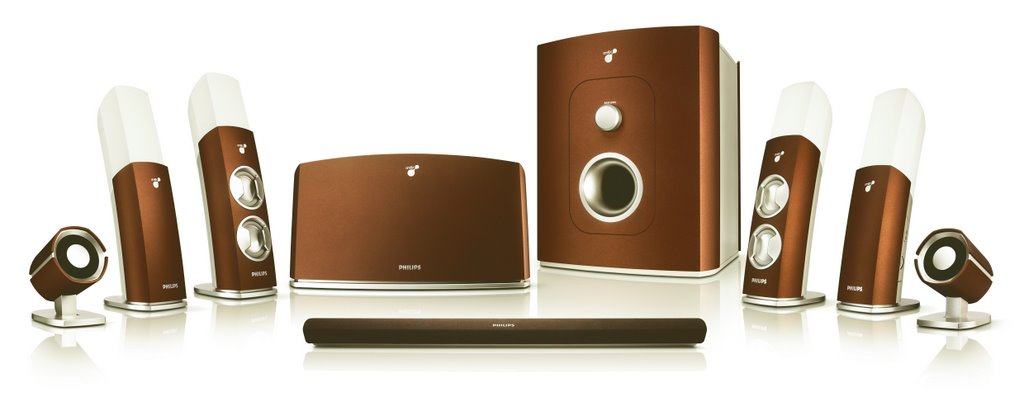
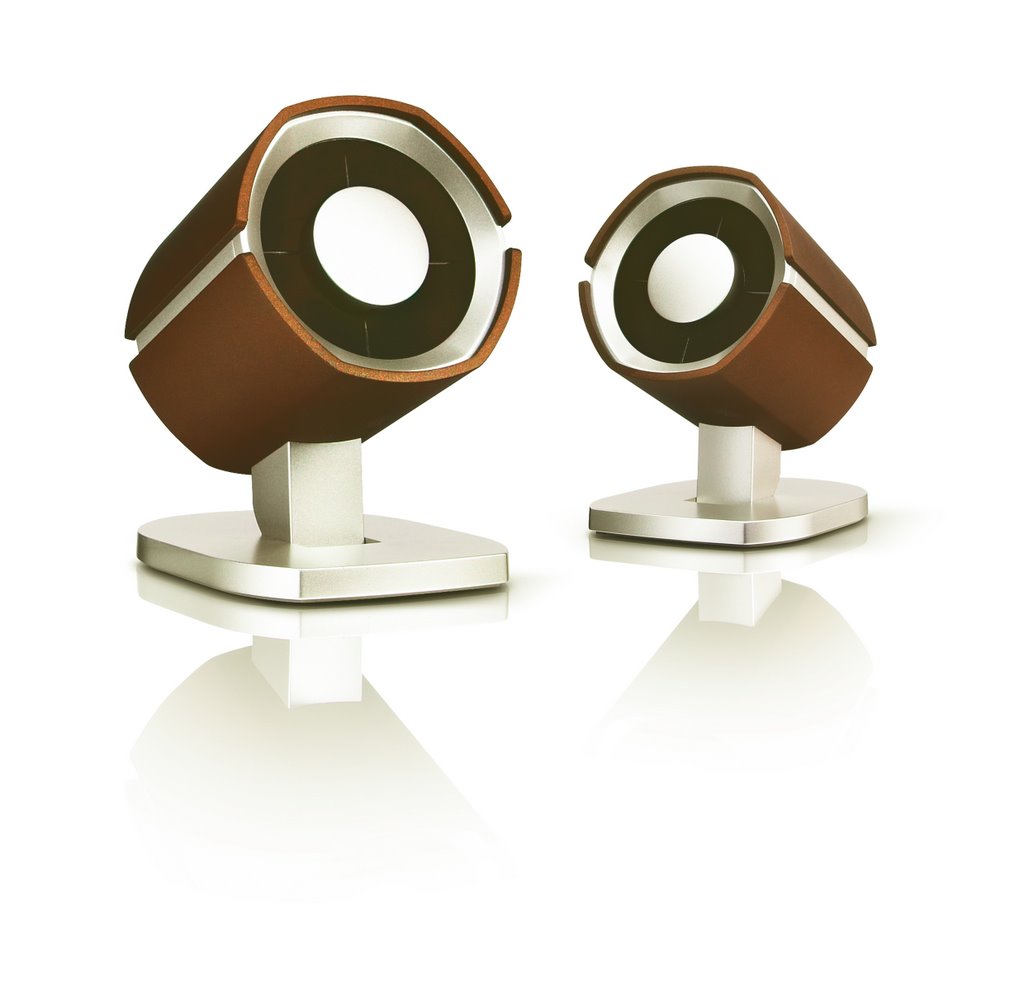
A complete amBX kit includes two satellite lights, two speakers with lights, a subwoofer, two fans, a wrist rumbler and a control unit. The control unit also comes with "wall washer" lights.

The first amBX-enhanced title available is Broken Sword: The Angel of Death from THQ Inc., but more titles will be announced soon, according to Philips.

What's next? Water pistols? Don't laugh. While Philips representatives said that amBX could support unique peripherals like water sprayers and smell generators, no such accessories are currently on the drawing board.